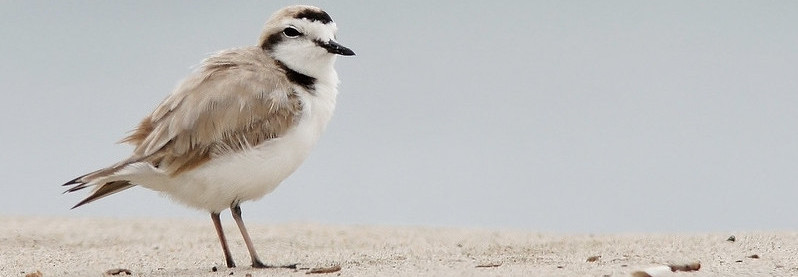
Western snowy plover
Scientific name: Charadrius nivosus
Size: About 6 inches long.
Description: Small shorebird with a thin dark bill, pale brown upper parts, white belly and darker patches on its shoulders and head.
Diet: Crustaceans, soft invertebrates, small insects.
Habitat: The Pacific coast population nests next to tidal ocean waters, including along the coast, peninsulas, offshore islands, bays, estuaries and coastal rivers.
Range: Washington to Baja California, with the vast majority of breeding plovers nesting in California.
Population: 2,217 adults, including around 200 at Oceano Dunes in 2019.
Nesting habits: The plover nests eggs in shallow depressions in the sand, including human footprints. Chicks are about the size of a thumb when hatched. The March-September breeding season coincides with the most popular times for humans to visit beaches.
Endangered status
Western snowy plovers are considered “Near Threatened” by the International Union for Conservation of Nature, and the Pacific coast population has been listed as “threatened” under the U.S. Endangered Species Act since 1993. The bird’s decline is attributed to human disturbance, animal predation and loss of nesting habitat.
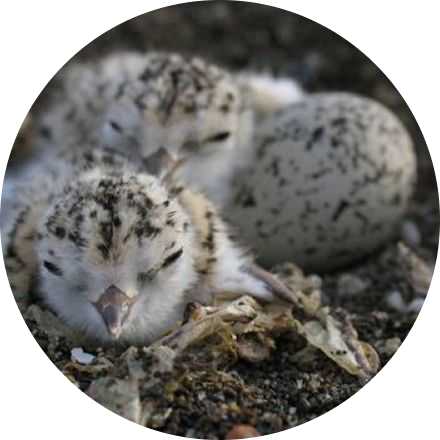
Source: USFWS Arcata Fish and Wildlife Office, USFWS 2019 5-year Review for Western Snowy Plover; Photos: USFWS, Ron LeValley/USFWS